- What is GMP compliance in cleanrooms?
- Why do many cleanrooms fail GMP despite meeting ISO?
- What design elements are required for GMP compliance?
- How does HVAC impact GMP compliance?
- How should monitoring be implemented?
- How should microbial control be handled?
- How should personnel be controlled?
- What is the role of SOPs in GMP?
- What validation activities are required?
- How should cleaning be performed?
- Why is data integrity important?
- What do GMP audits evaluate?
- What are common mistakes in GMP implementation?
- When should GMP systems be upgraded?
- How does GMP affect cost?
- How to maintain GMP compliance long-term?
- How does GMP relate to risk management?
- Is external consulting necessary?
- What is the most important factor for GMP compliance?
In real-world implementation, “Vietnam Cleanroom equipment VCR” observes that many cleanrooms are well-equipped but still fail GMP compliance due to a lack of system thinking. GMP is not a checklist, but the ability to maintain continuous control and prove it with data.
What is GMP compliance in cleanrooms?
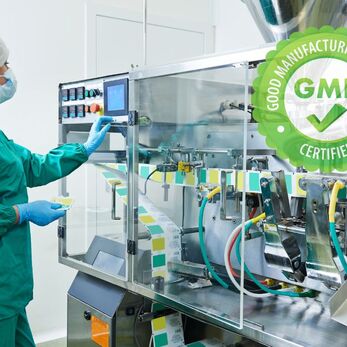
GMP compliance in cleanrooms means ensuring that the entire production system, including environment, equipment, personnel, and operational procedures, is controlled according to defined standards to guarantee product quality. This goes beyond achieving technical parameters such as ISO Class and includes microbial control, SOP implementation, personnel training, and comprehensive documentation systems. GMP requires that all cleanroom conditions be continuously monitored, recorded, and traceable to demonstrate that the system remains in a controlled state. Therefore, GMP compliance is not a one-time achievement but an ongoing process that requires coordination between engineering and operations.
Why do many cleanrooms fail GMP despite meeting ISO?
Many cleanrooms meet ISO requirements but fail GMP because ISO only addresses particle control, while GMP requires comprehensive control including microorganisms, operations, and data integrity. A cleanroom may achieve ISO Class 5 but still fail GMP if it lacks continuous monitoring, proper personnel control, or documented procedures. In addition, insufficient data recording and lack of traceability are common issues. This highlights that ISO is necessary but not sufficient for GMP compliance.
What design elements are required for GMP compliance?
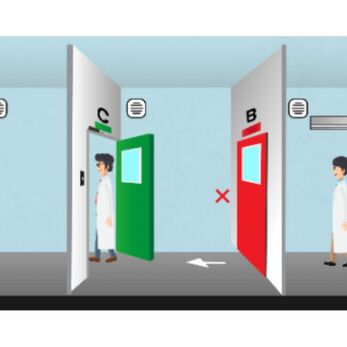
Cleanroom design for GMP must be based on a risk assessment of the production process. This includes proper classification (Grades A–D), appropriate airflow design, pressure differentials, and the use of materials that are non-shedding and easy to clean. Layout must ensure proper flow of personnel and materials to avoid cross-contamination. Design must also consider maintenance, cleaning, and inspection accessibility. A well-designed system provides the foundation for GMP compliance.
How does HVAC impact GMP compliance?
HVAC is the core system of a cleanroom and directly affects GMP compliance. It must control particles, microorganisms, temperature, humidity, and pressure. Airflow must effectively remove contamination and avoid dead zones. If HVAC performance is unstable, the entire cleanroom system becomes uncontrolled. Therefore, proper HVAC design and operation are critical.
How should monitoring be implemented?
Monitoring is mandatory under GMP to ensure environmental control. Parameters such as particles, microorganisms, temperature, humidity, and pressure must be tracked and recorded. In critical areas, monitoring must be continuous. Data must not only be collected but also analyzed for trends to detect deviations early. Data integrity must also be ensured.
How should microbial control be handled?
Microbial control is essential because microorganisms pose the highest risk in pharmaceutical production. Control measures include HEPA filtration, airflow design, cleaning procedures, and personnel control. Environmental monitoring must be conducted regularly, and data must be analyzed for trends. A multi-layered approach is required.
How should personnel be controlled?
Personnel are the largest contamination source. GMP requires training, proper gowning procedures, and behavioral control. The number of personnel should be limited, and activities must be supervised. Without proper personnel control, system performance cannot be maintained.
What is the role of SOPs in GMP?
SOPs ensure that all activities are performed consistently and under control. They must cover all operations, including routine tasks, cleaning, and deviation handling. SOPs must be regularly updated and personnel must be trained accordingly.
What validation activities are required?
Validation demonstrates that the cleanroom system operates as intended. It includes Design Qualification, Installation Qualification, Operational Qualification, and Performance Qualification. Revalidation is required when changes occur.
How should cleaning be performed?
Cleaning must follow validated procedures using appropriate disinfectants. Chemical rotation is required to prevent microbial resistance. Cleaning effectiveness must be verified through data.
Why is data integrity important?
Data integrity ensures that all recorded data is accurate, secure, and traceable. GMP compliance relies heavily on reliable data. Without it, compliance cannot be demonstrated.
What do GMP audits evaluate?
GMP audits assess the entire cleanroom system, including design, operations, data, and personnel. Auditors evaluate both outcomes and processes to identify deviations and improvement areas.
What are common mistakes in GMP implementation?
Common mistakes include focusing only on equipment while neglecting operations and data. Lack of training and failure to analyze trends also lead to instability and audit failure.
When should GMP systems be upgraded?
Upgrades are required when there are changes in products, processes, or regulations. Monitoring data may also indicate the need for improvements.
How does GMP affect cost?
GMP increases investment and operational costs but reduces risk and improves product quality. It is a necessary investment for long-term success.
How to maintain GMP compliance long-term?
Maintaining GMP requires continuous monitoring, personnel training, and system improvement. The focus is on maintaining control, not just achieving it.
How does GMP relate to risk management?
GMP incorporates risk management principles to proactively identify and control risks, improving system reliability.
Is external consulting necessary?
For complex systems, consulting can reduce risk and implementation time. However, internal understanding and operation remain essential.
What is the most important factor for GMP compliance?
The most important factor is the ability to control and demonstrate system performance through reliable data.
Duong VCR